The Banff and Jasper road trip is the single greatest drive in Canada — and one of the most spectacular in the world. You'll wind through two UNESCO World Heritage national parks, past turquoise lakes that don't look real, past a glacier you can walk on, and through a mountain valley so dramatic it's been called the "roof of the world."
This 5-day itinerary starts and ends in Calgary, covers the essential stops between Banff and Jasper, and gives you realistic timing, where to stay, and how to book the things that sell out months ahead.
Day 1: Calgary → Banff Townsite
Pick up your rental car in Calgary and head west on the Trans-Canada Highway (Hwy 1). You'll cross into Banff National Park in about 90 minutes — your Discovery Pass covers both parks for the whole trip.
Afternoon: Arrive in Banff
Drop your bags, then walk Banff Avenue toward Cascade Mountain — the postcard view you've seen a hundred times looks even better in person. Grab coffee at Whitebark Café and browse the shops along the main strip.
Evening: Bow Falls & Upper Hot Springs
A 20-minute walk from downtown brings you to Bow Falls — dramatic at any water level. Finish the evening at the Banff Upper Hot Springs for a soak with mountain views. They close at 11 pm.
🏨 Where to Stay — Calgary (Night Before)
If you're flying in, stay a night in Calgary and leave first thing in the morning.
🏨 Where to Stay — Banff (Nights 1–3)
Use Banff as your base for Days 1–3. Properties fill fast — book 3+ months ahead in summer.
Day 2: Moraine Lake, Lake Louise & Johnston Canyon
Morning: Moraine Lake (must pre-book shuttle)
Moraine Lake is the star of this entire trip — the Valley of the Ten Peaks reflected in turquoise water is so famous it was on the Canadian $20 bill. Access is strictly controlled: you must take the Parks Canada shuttle from the Lake Louise Ski Resort parking lot. Book your shuttle slot at reservation.pc.gc.ca — they open in January for the summer season and sell out within hours.
Hike the Rockpile Trail (20 minutes round trip) for the famous viewpoint. Arrive on your shuttle, explore for 2–3 hours, and catch the return.
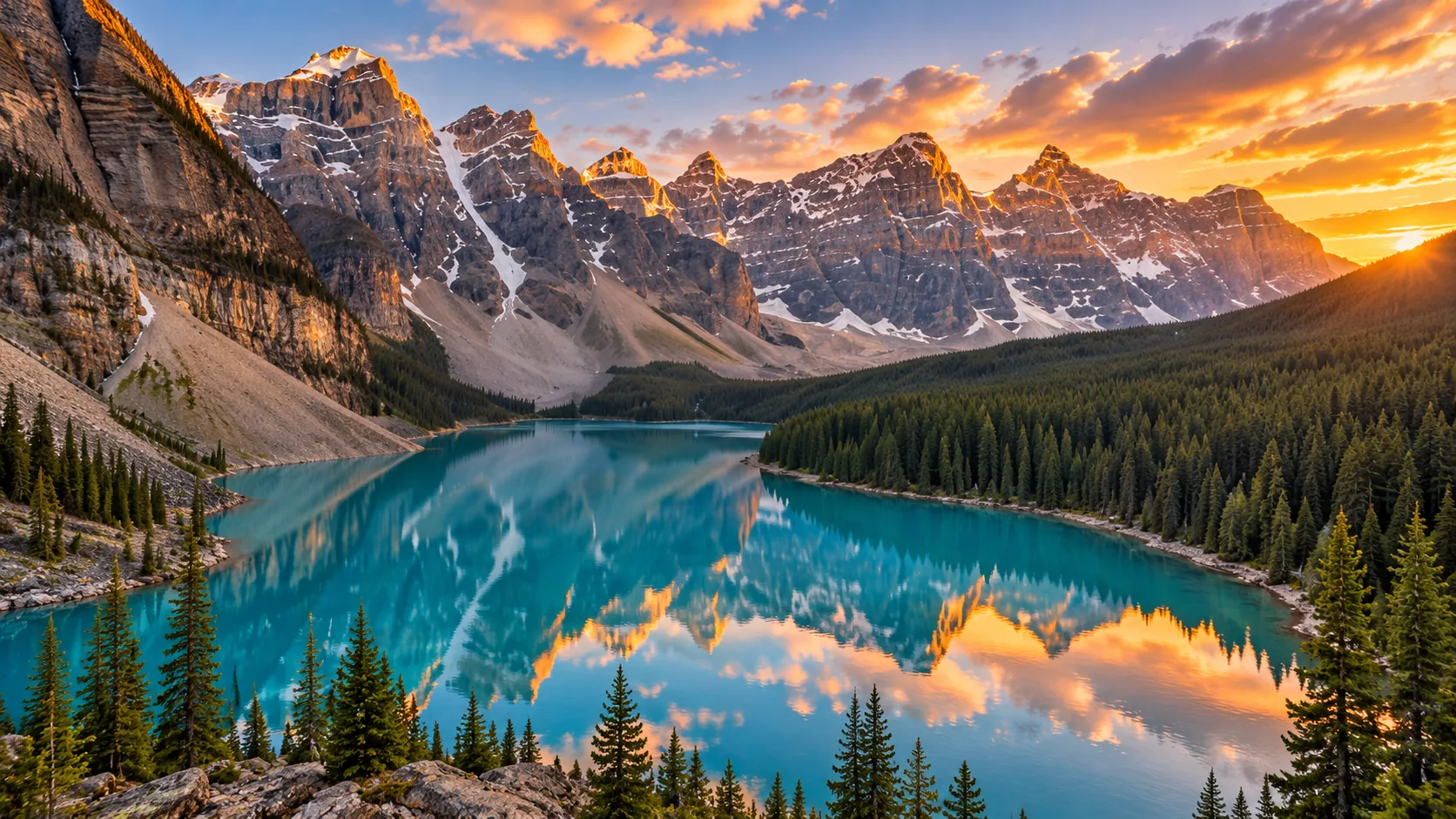
Moraine Lake and the Valley of the Ten Peaks — one of the most photographed spots in Canada.
Afternoon: Lake Louise & Johnston Canyon
Lake Louise is only 12 minutes from Moraine Lake. The glacier-fed lake in front of the Fairmont Château is spectacular — walk the lakeside trail and continue to the Plain of Six Glaciers teahouse if you have energy (3.4 km each way).
On the way back to Banff, stop at Johnston Canyon. The lower falls walk is easy (2.7 km return) and the canyon's narrow limestone slot with an overhanging walkway is genuinely dramatic. Upper falls add another 2.4 km.
Day 3: Banff Gondola, Vermilion Lakes & Bow Valley Parkway
Morning: Banff Gondola
Ride the Banff Gondola to the summit of Sulphur Mountain (2,281 m) for panoramic views of six mountain ranges. Go early — it opens at 8 am and clouds often build by midday. The boardwalk to Sanson Peak adds an easy 1 km extension.
Afternoon: Vermilion Lakes & Bow Valley Parkway
Vermilion Lakes is a 3-minute drive from downtown and one of the best wildlife-spotting areas in the park — elk graze the meadows at dawn and dusk, and great blue herons fish the shallows year-round.
Drive the Bow Valley Parkway (Highway 1A) — the slower, quieter alternative to the Trans-Canada. Stop at Castle Mountain for photos, and watch the roadside meadows for bears and elk, especially in the evening.
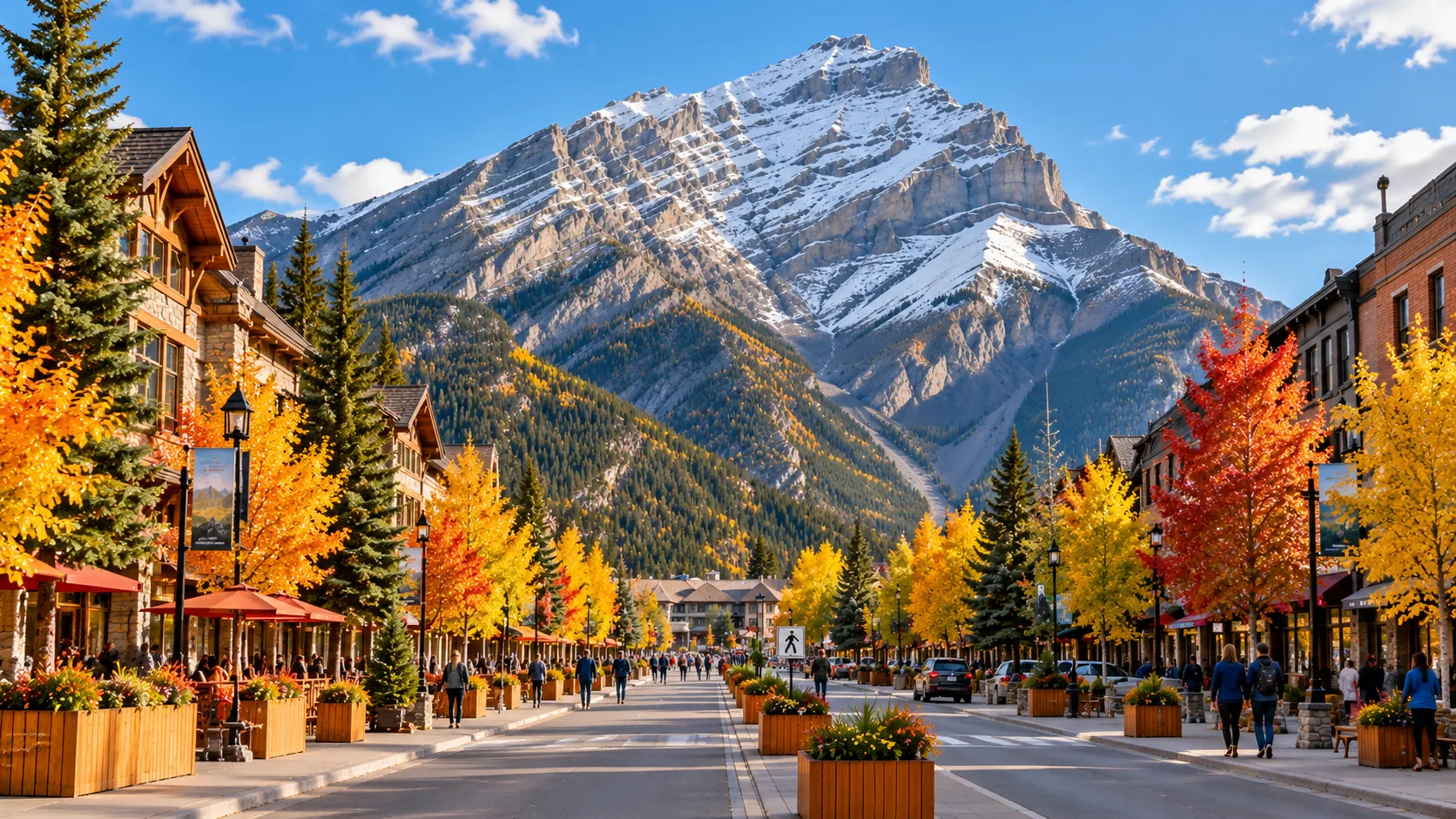
Banff Avenue in peak autumn — Cascade Mountain frames the main street perfectly.
Day 4: The Icefields Parkway — Banff to Jasper
The Icefields Parkway (Highway 93) is consistently ranked among the world's top scenic drives. The 230 km from Lake Louise to Jasper passes glaciers, turquoise lakes, and some of the most dramatic mountain scenery on the planet. Leave Banff by 8 am — the drive takes 3 hours without stops, but plan 7–8 hours with them.
Key Stops Southbound to North
- Bow Lake — glacier-fed lake with Crowfoot Glacier in the background (90 min from Banff)
- Peyto Lake Viewpoint — wolf-shaped turquoise lake from above; 10-minute uphill walk
- Mistaya Canyon — narrow limestone gorge, 10-minute walk from the highway
- Columbia Icefield & Athabasca Glacier — the centerpiece (see below)
- Sunwapta Falls — powerful twin waterfalls, 5 minutes from the road
- Athabasca Falls — the loudest, most powerful falls in the Rockies, 30 km south of Jasper
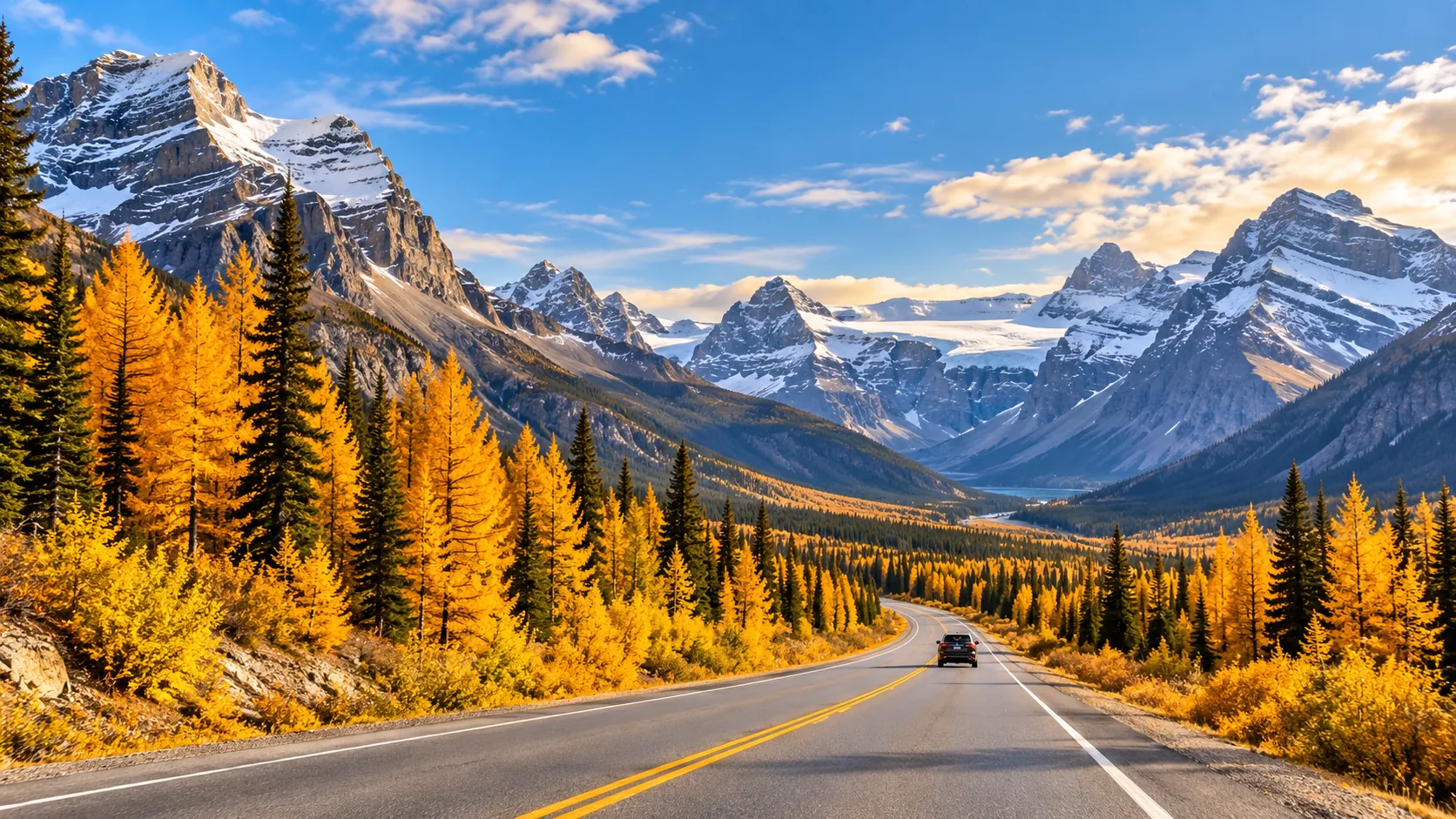
The Icefields Parkway in autumn — golden larches line the highway for weeks in September.
Columbia Icefield & Athabasca Glacier
The Columbia Icefield is the largest icefield in the Rocky Mountains — 325 km² of ice feeding eight major glaciers. You can walk right up to the toe of the Athabasca Glacier from the highway parking lot (free, 20-minute walk to the glacier edge).
For a guided ice walk onto the glacier itself, book the Columbia Icefield Adventure (Ice Explorer bus + Glacier Skywalk combo) — reserve ahead at brewster.ca. It's touristy but genuinely impressive standing on a thousand-year-old glacier.
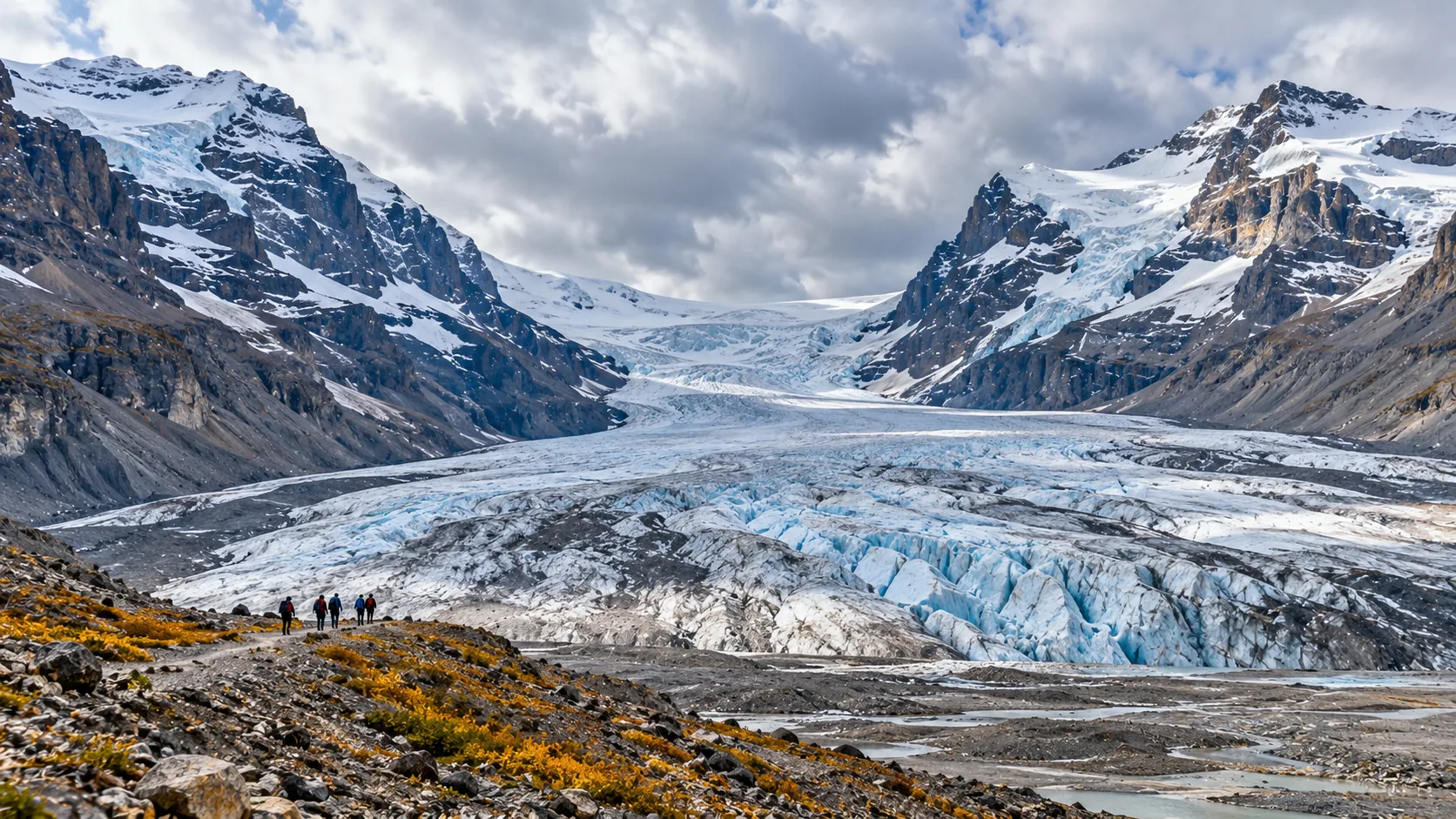
Athabasca Glacier — you can walk to the glacier's toe for free, or book a guided ice walk.
Day 5: Jasper — Maligne Lake & Spirit Island
Morning: Maligne Lake & Spirit Island
Maligne Lake is the largest natural lake in the Canadian Rockies (22 km long) and one of the most photographed spots in the entire national parks system. The famous view is from Spirit Island — a tiny tree-covered island in a mountain-ringed bay at the far end of the lake. You can only reach it by boat: book the 90-minute Maligne Lake Spirit Island cruise through Pursuit (malignelake.com) — it sells out weeks in advance.
Afternoon: Jasper Townsite & Drive Back
Jasper townsite is smaller and less touristed than Banff — grab lunch on Connaught Drive and visit Jasper SkyTram if time allows (the gondola to Whistlers Mountain has sweeping views of the Athabasca Valley).
The return to Calgary runs 4.5 hours via Highway 16 East and Hwy 11 through David Thompson Country, or 5 hours back down the Icefields Parkway — either makes for a spectacular final afternoon.
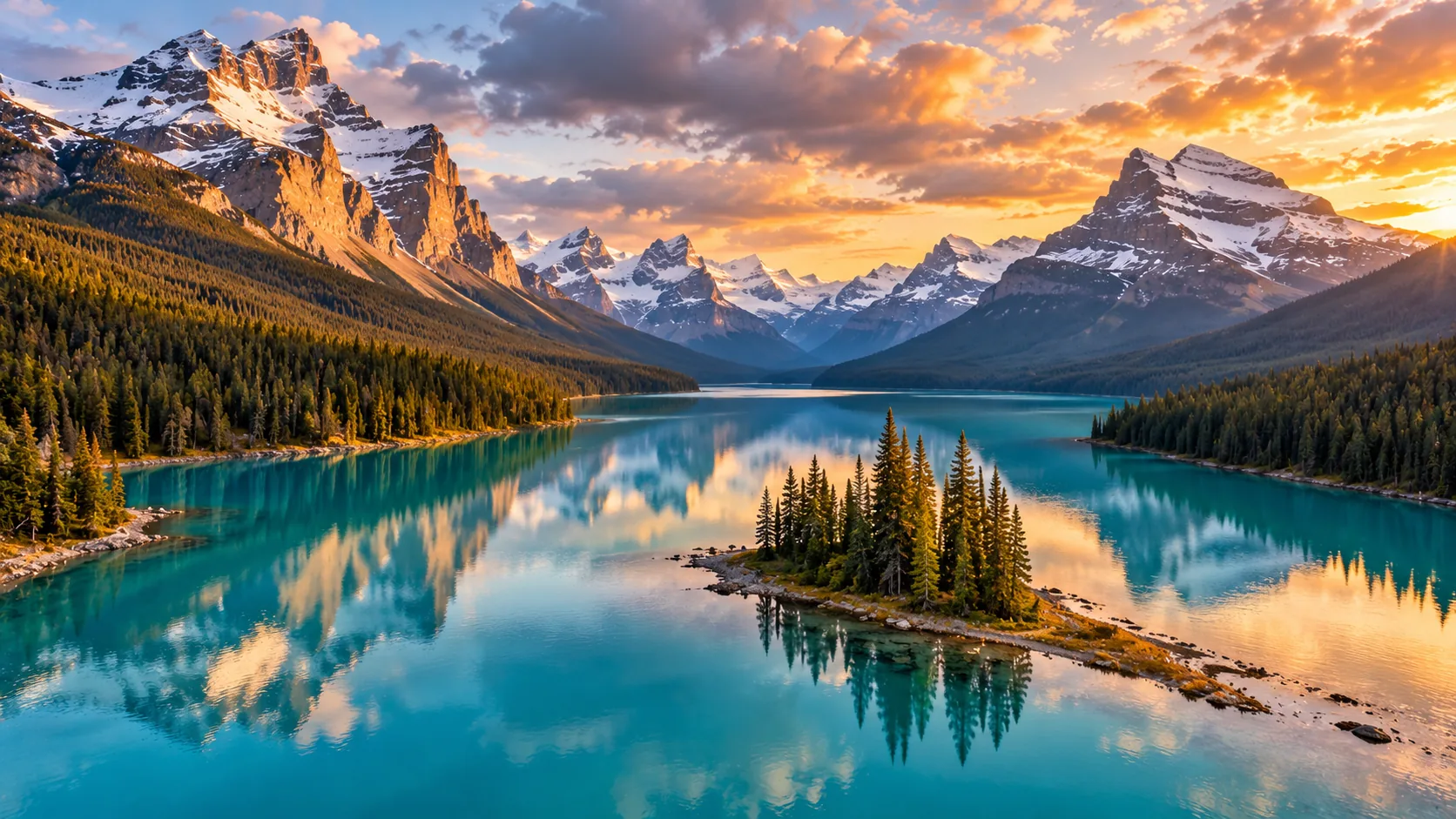
Spirit Island on Maligne Lake — only reachable by boat, and absolutely worth booking ahead.
Practical Info: Planning Your Banff & Jasper Road Trip
Best Time to Visit
Late June to early September is peak season — all attractions are open, wildflowers are out, and the lakes are at their most vivid turquoise. September brings golden larches (late September is peak) and thinner crowds. Shoulder season (May, October) is quieter but some facilities close and snow can affect high mountain roads.
What to Book in Advance
- Moraine Lake shuttle — opens in January for the season; sells out in hours
- Spirit Island / Maligne Lake cruise — book 4–6 weeks ahead minimum in summer
- Banff/Jasper accommodation — 3–6 months ahead for summer dates
- Columbia Icefield Adventure — 2–3 weeks ahead is usually sufficient
- Parks Canada Discovery Pass — buy before you arrive at pc.gc.ca
Getting There
Fly into Calgary International Airport (YYC) — all major Canadian airlines plus international routes. Car rentals are at the airport. There is no train service between Calgary and Banff for road trippers; a car is essential for this itinerary.
Driving Tips
- Wildlife is everywhere — elk, deer, bears, and bighorn sheep regularly cross the highway. Drive slowly, especially at dawn and dusk.
- Gas up in Banff and Lake Louise — the Icefields Parkway has no gas stations between Lake Louise and Jasper.
- Cell service is limited or nonexistent on most of the Icefields Parkway. Download offline maps before you leave.
- Speed limits in national parks are lower than provincial highways — 60–90 km/h.
🍁 Explore More of Canada
Find more road trip guides, city comparisons, and neighbourhood deep-dives across Canada.
Read the Travel Blog →